

↓
 

Lafayette Land Surveying

...serving the Lafayette, Alabama & Coweta County area...

Lafayette Land Surveying
  • Home
  • ALTA Title Survey
  • Boundary Surveying
  • Construction Survey
  • Drone LiDAR Mapping
  • Elevation Survey
  • Land Surveying
  • Topographic Survey
  • About Us
  • Blog
  • Contact Us
Home - Page 2 << 1 2 3 4 … 6 7 >>

Post navigation

← Older posts
Newer posts →

Who Pays for a Land Survey: Buyer or Seller?

Lafayette Land Surveying Posted on May 29, 2026 by Lafayette SurveyorMay 26, 2026
Home buyers reviewing land survey documents with a real estate agent during a property purchase meeting

There is no single rule about who pays for a land survey. In most home purchases, the buyer covers the cost, especially when a lender requires one. That said, survey fees are fully negotiable and can be assigned to either party in the purchase contract. Local customs also play a role, and they vary from state to state.

If you are about to buy or sell property and the question of survey costs has come up, you are not alone. It is one of the most common points of confusion during real estate negotiations. The good news is that the answer is more flexible than most buyers and sellers expect.

The General Rule: Buyers Usually Pay

In most residential real estate transactions in the United States, the buyer is responsible for paying the survey fee. This is especially true when the buyer’s mortgage lender requires a survey as a condition of loan approval. The cost typically appears on the buyer’s closing disclosure under settlement fees.

When a lender requires a survey before approving a mortgage, that requirement falls on the borrower, which is the buyer. The survey fee is then listed on the Loan Estimate and the Closing Disclosure, two documents the buyer receives before and at closing.

The Consumer Financial Protection Bureau classifies survey fees as allowable closing costs on both conventional and FHA loan transactions. This means the fee can be folded into the total amount due at closing rather than paid out of pocket in advance, depending on how the transaction is structured.

That said, the fact that buyers usually pay does not mean they have to. It simply means that if no one negotiates otherwise, the buyer pays by default.

When the Seller Pays

A seller may pay for a land survey as a negotiating tool, as a goodwill gesture, or because a buyer requests it as a condition of the offer. In some states, it is common practice for sellers to provide a current survey upfront. Sellers can also cover the cost through closing cost concessions.

There are several situations where the seller ends up covering the survey fee.

The seller offers a recent survey. In states like Texas and Florida, it is common practice for sellers to provide buyers with a copy of an existing survey early in the transaction. This saves time and can make the listing more attractive. If the survey is recent and no changes have been made to the property since it was completed, the buyer’s lender may accept it without ordering a new one.

The buyer requests it in the offer. A buyer can include a line in the purchase offer asking the seller to pay for a new survey. This is a reasonable request, especially in a buyer’s market where sellers are competing for attention. According to a 2023 National Association of Realtors report, 41 percent of accepted offers included some form of seller concession toward closing costs, which can include survey fees.

The seller offers concessions. Even if the survey is not specifically mentioned, a buyer can negotiate a seller credit toward closing costs and apply part of that credit to the survey fee. On conventional loans, Fannie Mae guidelines allow sellers to contribute between 3 and 9 percent of the purchase price toward buyer closing costs, depending on the down payment amount.

How Survey Costs Are Handled at Closing

Most buyers who pay for a survey do not write a check directly to the surveyor. The fee is collected as part of the closing process instead.

Here is how it typically works:

  1. The buyer orders the survey after going under contract, usually at the direction of their lender or agent.
  2. The surveyor completes the work and submits an invoice.
  3. The fee is added to the buyer’s closing disclosure as a settlement service charge.
  4. The amount is paid at the closing table, either directly or through the title company.

If the seller has agreed to pay the fee, it appears as a seller-paid closing cost on the settlement statement, reducing the seller’s net proceeds.

What Happens in a Cash Purchase

When no lender is involved, no one is required to order a survey. Both parties can close without one. In practice, most experienced cash buyers still order a survey independently because the protection it provides does not depend on whether a bank requires it.

In a cash transaction, survey responsibility can be negotiated just like any other closing cost. Some cash buyers ask the seller to provide a current survey as a condition of the offer. Others prefer to hire their own surveyor to control the timeline and confirm the work meets their standard.

Negotiating Survey Costs: Tips for Both Parties

For buyers:

  • Ask your agent whether the seller has a current survey on file before ordering a new one. If it meets your lender’s requirements, you may be able to use it at no cost.
  • Include survey responsibility in your initial offer. It is easier to negotiate before a contract is signed than to raise it later.
  • If the seller agrees to cover closing costs, confirm in writing that the survey fee is part of that agreement.

For sellers:

  • Providing a recent survey upfront signals transparency and removes one obstacle from the buyer’s checklist.
  • Offering to cover the survey in a slow market is a low-cost concession that can help close a deal that might otherwise stall.
  • If you order the survey before listing, keep a copy of the surveyor’s credentials and the date of completion. Buyers and lenders will ask for both.

Does Survey Cost Affect Your Taxes?

Survey fees paid during a home purchase are generally not directly tax deductible for a primary residence. However, the IRS allows buyers to add settlement costs, including survey fees, to the cost basis of the property. A higher cost basis reduces the taxable gain when the property is eventually sold.

For investment properties or commercial real estate, survey costs may be deductible as a business expense in the year they are incurred. A tax professional can advise on the right treatment based on how the property is used.

Frequently Asked Questions

Can survey costs be rolled into my mortgage? 

Survey fees are closing costs, and closing costs can sometimes be rolled into certain loan types, depending on the program and lender guidelines. Ask your loan officer whether your specific loan allows it.

What if the buyer and seller both want the other to pay? 

This is a negotiation point like any other in a real estate transaction. If neither party wants to absorb the cost, a common resolution is to split the fee. Your real estate agent can help broker an agreement that keeps the deal moving forward.

Should I use the seller’s survey or order my own? 

If the seller’s survey is recent and your lender accepts it, using it saves time and money. If it is old or changes have been made to the property, ordering a fresh one is the safer choice.
Posted in land surveying | Tagged Land Surveying

Do I Need a Land Survey Before Buying Property?

Lafayette Land Surveying Posted on May 27, 2026 by Lafayette SurveyorMay 26, 2026
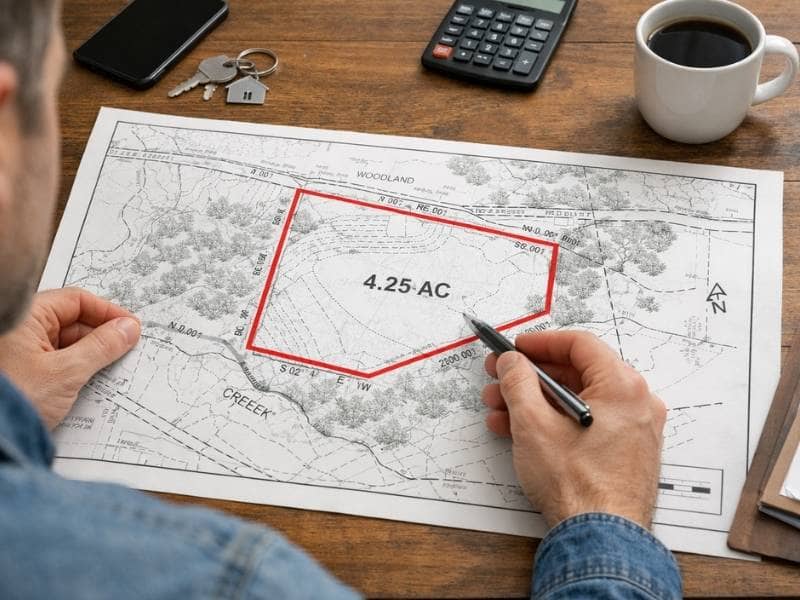
Homebuyer reviewing a land survey before buying property and checking property boundary details

You are not always legally required to get a land survey before buying property, but it is strongly recommended. A survey reveals boundary lines, encroachments, and easements that a title search cannot detect. Skipping one can lead to expensive legal problems after the sale closes.

Most homebuyers spend months focused on inspections, appraisals, and mortgage paperwork. A land survey is rarely the first thing anyone brings up. Buyers often assume that title insurance covers everything, or that the seller’s word on lot lines is good enough.

Neither assumption is safe. This article explains when a survey is required, what it uncovers that other reports miss, and how to make sure you are fully protected before you sign.

Is a Survey Legally Required When Buying a Home?

A land survey is not legally required in every home purchase, but many mortgage lenders require one before approving a loan. Requirements vary by state, lender, and property type. Cash buyers face no legal obligation, but skipping a survey leaves them exposed to risks they cannot see.

Whether you need a survey depends on a few specific factors.

If you are financing with a mortgage, your lender may require a survey or a mortgage location certificate before closing. This is especially common for rural land, properties with recent additions, or lots with unusual shapes. Ask your lender early in the process so the requirement does not catch you off guard during the final week before closing.

If you are paying cash, no one can require you to order a survey. But cash buyers carry the same property risks as financed buyers, without a lender review process to flag problems first. That makes independent due diligence even more important.

If an existing survey is on file, your lender may accept it, depending on its age and whether any changes have been made to the property since it was completed. A survey conducted before a fence, deck, or addition was built may not reflect current conditions on the ground.

What a Survey Reveals That a Title Search Will Not

A title search reviews legal ownership records. A land survey physically measures the property. Only a survey can detect encroachments, confirm the exact location of boundary lines, or reveal that a neighbor’s fence, driveway, or structure sits on land you are about to purchase.

Title insurance is useful, but it has clear limits. It protects against claims related to ownership history, such as liens or unresolved ownership disputes. It does not show you where the physical edges of your property actually are. According to the American Land Title Association, standard title policies do not cover boundary disputes that a current survey would have revealed.

Here is what a survey can uncover that a title search cannot:

  • Encroachments. A neighbor’s fence, shed, or driveway may cross into the property you are buying. Studies suggest encroachments affect roughly 11% of residential properties in the United States, making this one of the most common survey findings.
  • Boundary discrepancies. The lot described in the legal deed may not match the lot as it exists on the ground. Older property descriptions are sometimes vague or contain measurement errors that have never been corrected.
  • Easements. A utility company or neighboring property owner may hold a legal right to use part of your land. Easements appear on approximately 25% of residential deeds in the U.S., and many buyers are unaware of them at purchase. Depending on the easement, it can restrict where you build, what you plant, or who can access your land.
  • Setback violations. A structure on the property may sit too close to the boundary line, violating local zoning requirements. This can affect your ability to get permits, renovate, or sell the home in the future.

Any one of these problems becomes your legal responsibility the moment you take ownership.

Real Situations Where Buyers Wished They Had a Survey

These are not rare edge cases. Licensed surveyors encounter them regularly.

The fence that was not on the property line. A buyer purchased a home with a fenced backyard and assumed the fence marked the boundary. After closing, the neighbor hired a surveyor and discovered the fence sat three feet inside the neighbor’s property. The new owner paid to have it relocated.

The addition was built without a permit. A home had a sunroom added by a previous owner. No permit was pulled and no survey was done at the time. The addition extended two feet past the legal property line onto land owned by the municipality. The buyer found out when applying for a renovation permit two years after closing.

The easement that changed the plan. A buyer purchased a rural lot with plans to build a guest cabin. A survey revealed a utility easement running across the center of the planned build site. The project had to be fully redesigned, adding cost and months of delay.

Boundary disputes found after closing typically cost between $5,000 and $25,000 to resolve, depending on whether legal action becomes necessary.

Boundary Survey vs. Mortgage Survey: Which One Do You Need?

For most home purchases, a boundary survey offers the strongest legal protection. It establishes exact property lines and produces a certified document you can use if a dispute arises. A mortgage survey meets lender requirements at a lower cost but does not carry the same legal weight.

A boundary survey physically locates and marks property corners, documents any encroachments or easements found, and produces a signed, sealed plat from a licensed surveyor. It is the document that holds up in court.

A mortgage location survey is a lower-cost option that satisfies many lender requirements. It shows the general position of structures on a lot but does not legally establish boundary lines. If you are buying in a dense neighborhood, on a waterfront lot, or on land with a complex ownership history, the added protection of a boundary survey is worth the difference in price.

How to Add a Survey to Your Purchase

Getting a survey before closing takes only a few straightforward steps.

  1. Ask your agent early. Find out whether the listing includes a current survey and request a copy if one exists.
  2. Confirm lender requirements. Ask your lender what type of survey is required and what specifications it must meet.
  3. Hire a licensed surveyor. Your agent, lender, or title company can provide referrals. Confirm the surveyor holds an active license in the state where the property is located.
  4. Schedule before the inspection deadline. If the survey reveals a serious issue, you need time to renegotiate terms or walk away from the purchase.
  5. Review the findings before closing. Ask your surveyor to explain any flagged items so you fully understand what you are buying.

Frequently Asked Questions

Can I use the seller’s existing survey? 

Sometimes. If the survey is recent, completed by a licensed surveyor, and no changes have been made to the property since it was done, your lender may accept it. Always confirm with both your lender and title company before relying on it.

What if the survey finds a problem? 

You have several options. You can ask the seller to fix the issue before closing, request a price adjustment, or walk away if the problem is serious enough. Finding a problem before closing is always better and far less expensive than discovering it after you own the property.

Does title insurance cover boundary disputes? 

Standard title insurance does not cover boundary disputes that a current survey would have revealed. Some policies offer survey coverage as an add-on. Read your policy carefully and ask your title agent what is included before you close.

Posted in land surveying | Tagged Land Surveying

How Much Does a Land Survey Cost?

Lafayette Land Surveying Posted on May 26, 2026 by Lafayette SurveyorMay 26, 2026
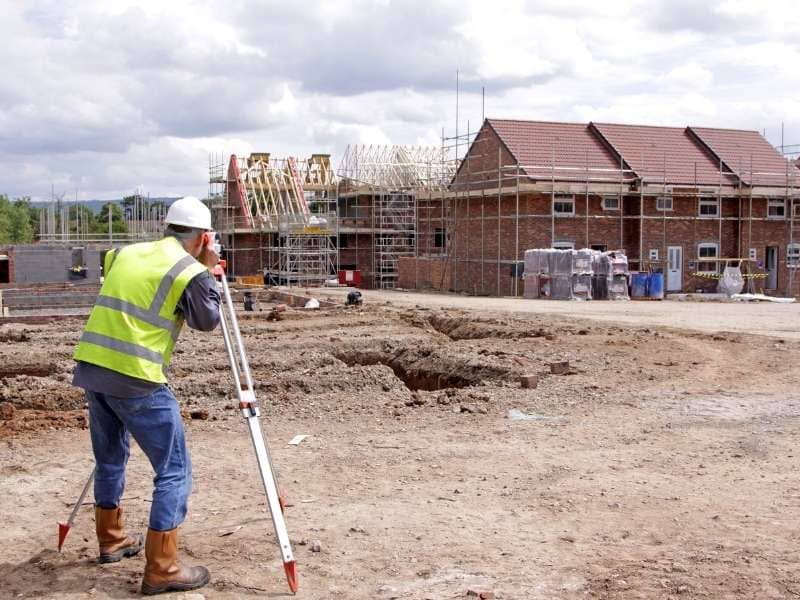
Land surveyor working at a residential construction site while preparing a land survey cost estimate

A land survey costs between $376 and $745 on average for a standard residential property, with a national average of around $526. Prices range from as low as $100 for a basic mortgage survey to more than $10,000 for a commercial ALTA survey. The final cost depends on the type of survey, property size, terrain, and your location.

A land survey is one of the more straightforward professional services you will pay for in a real estate or construction project. The price is predictable once you know what drives it. This guide breaks down current costs clearly so you can budget with confidence and know what questions to ask before hiring a surveyor.

Average Land Survey Costs by Type

Survey prices vary widely because different survey types involve different amounts of work. A mortgage survey takes a few hours. An ALTA commercial survey can take weeks. Knowing which type you need is the first step to getting an accurate cost estimate.

Not all surveys are the same. The type you need depends on your purpose, whether that is buying a home, settling a boundary question, or planning a construction project.

Survey TypeTypical Cost RangeCommon Use
Mortgage / Location Survey$100 to $500Lender requirement at closing
Boundary Survey$400 to $1,500Establishing legal property lines
Topographic Survey$500 to $2,500Construction and site planning
Construction Staking$800 to $3,000Marking lot for building permits
Subdivision / Plat Survey$1,500 to $6,000Dividing land into multiple parcels
ALTA / NSPS Survey$2,000 to $10,000+Commercial real estate transactions

A mortgage location survey is the most basic option. It shows where structures sit on a lot and satisfies most lender requirements, but it does not legally establish property corners.

A boundary survey goes further. It physically locates and marks the corners of a parcel using recorded deeds and on-site measurements. This is the type most homeowners and property buyers need.

An ALTA survey is required for most commercial transactions. It combines boundary research, title review, and on-site measurement into one detailed document that meets national standards set by the American Land Title Association.

What Drives the Final Price

Six factors determine what a surveyor will charge: property size, terrain and vegetation, the type of survey needed, the availability of historical records, local market rates, and how quickly you need the work completed.

Property Size

Larger properties take more time to measure and document, so they cost more. Here are general ranges based on acreage:

  • Under 0.5 acres: $400 to $700
  • 0.5 to 1 acre: $600 to $1,000
  • 1 to 5 acres: $1,000 to $2,500
  • 5 to 10 acres: $2,000 to $4,000
  • Over 10 acres: priced per acre, typically $50 to $500 per acre

Terrain and Vegetation

A flat, open suburban lot is straightforward to survey. A hillside property or one covered with dense brush requires more time in the field and sometimes specialized equipment. Expect higher quotes any time the terrain is steep, wet, or heavily wooded.

Historical Records

Before a surveyor sets foot on your property, they research the legal history of the parcel. If the last survey was recent and county records are complete, that research moves quickly. If records are outdated, missing, or unclear, the surveyor spends more time at a desk before any fieldwork begins. The National Society of Professional Surveyors notes that incomplete records can add several hours of billable research time to a project.

Local Market Rates

Labor costs vary by region. Urban markets and high cost-of-living areas tend to have higher survey rates. In rural areas, rates may be lower, but travel time from the surveyor’s office to your property can offset that difference.

Turnaround Time

Standard delivery for a residential survey runs one to two weeks from the date fieldwork is completed. If you need results faster, for example to meet a closing deadline, most firms offer rush service at an added cost of 20 to 50 percent above the standard rate.

How to Get an Accurate Quote

Surveyors price jobs individually after reviewing the specifics of a property. To get the most useful estimate, prepare the following before you call:

  • Your parcel identification number or legal description, available from your county assessor’s website or a recent tax bill
  • The approximate size and shape of the lot
  • The date of any previous survey, plus a copy if you have one
  • A clear description of what you need the survey for

Get at least three quotes. Survey pricing is competitive and rates can vary by 20 to 40 percent between firms for identical work. When comparing quotes, confirm that each one specifies the same deliverable. A signed and sealed plat from a licensed surveyor is not the same as a simple sketch or a verbal boundary description.

Also ask whether the quote includes physical markers at property corners. Most boundary surveys do include iron pins or rebar stakes, but some quotes cover documentation only. Clarifying this upfront avoids surprises at the end of the job.

Frequently Asked Questions

Can I negotiate the price of a land survey? 

Yes, to a degree. Surveyors have limited flexibility on labor costs, but providing a copy of a previous survey, having your parcel ID ready, and scheduling during a slow period can all reduce research and scheduling time. Bundling multiple parcels or neighboring properties into one project can also bring the per-property cost down.

Does a land survey include property markers? 

Most boundary surveys include the placement of physical markers at property corners. Confirm this before signing a contract, as some quotes cover research and documentation only.

How long does a land survey stay valid? 

A survey does not expire, but courts and lenders may require an updated one if the existing survey is more than five to ten years old, or if improvements have been made to the property since the last survey was completed.

What is included in the final deliverable? 

A completed boundary survey typically includes a signed and sealed plat or drawing, a written legal description of the property, and documentation of any monuments placed or found during the survey. Ask your surveyor to confirm what is included before work begins.

Posted in land surveying | Tagged Land Surveying

Post navigation

← Older posts
Newer posts →
Get Quote Button
© Boxer Survey USA
LafayetteLandSurveying.com

Lafayette, Alabama
Phone: (334) 234 9946

Web Development and SEO by:
AuburnBusiness.com, LLC


Privacy Policy | Terms of Use

The owner of this website, Boxer Survey USA, provides coordination of professional land surveying and engineering services in all 50 states. The professional surveying and engineering services provided to you will be conducted by fully licensed professionals in your state.

Privacy
↑